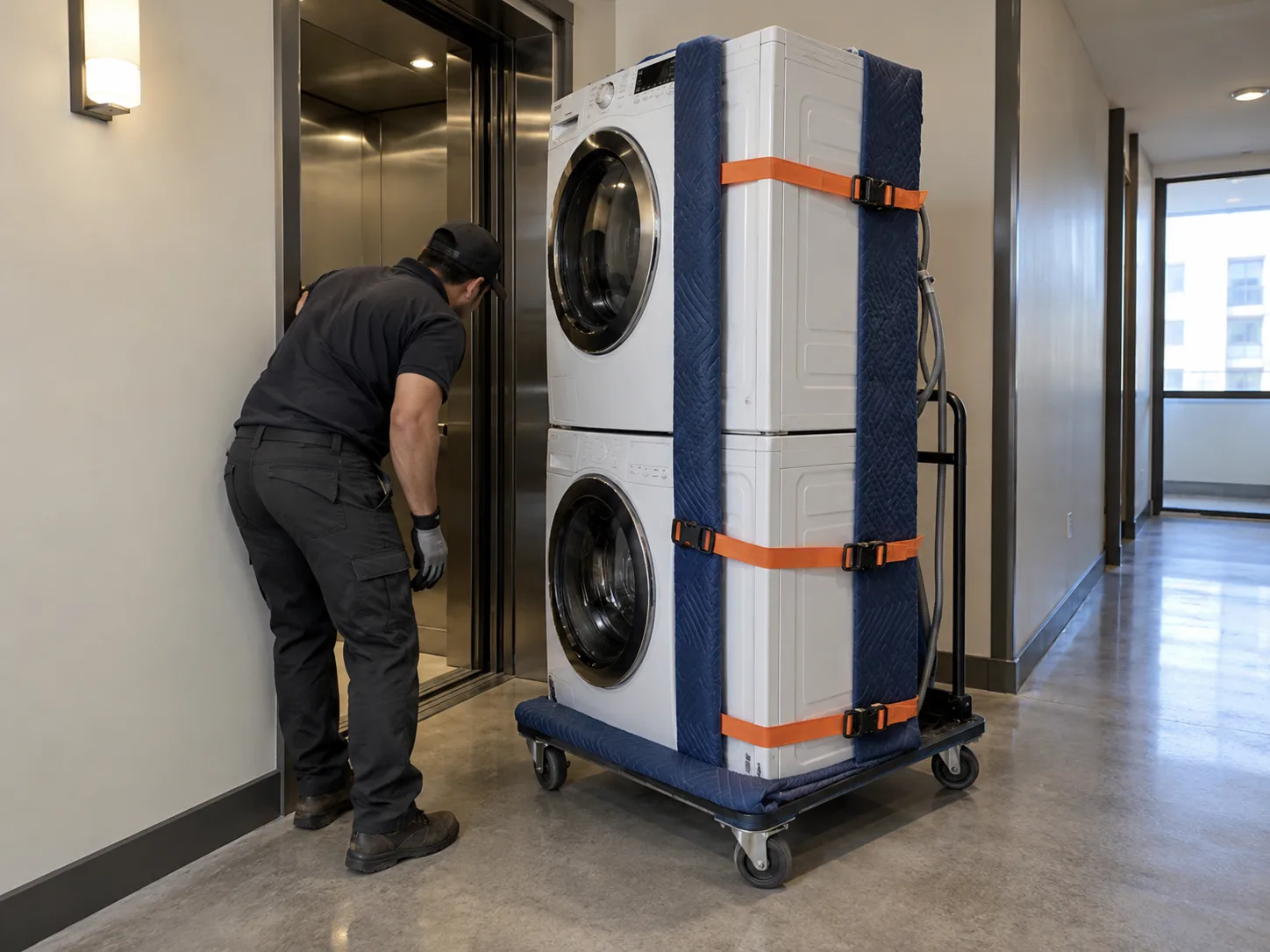
A laundry-appliance pickup goes more smoothly when the machines are disconnected, hoses are contained, and the route is known before the crew arrives. Basement stairs and stacked units are the two details most likely to change the plan.
Confirm who handles disconnection
Removal crews haul appliances; they do not automatically perform plumbing, electrical or gas work. Arrange qualified disconnection for gas dryers, hardwired equipment or anything you are not prepared to disconnect safely. Close and cap connections as directed by the appropriate professional, then keep hoses and cords secured to the machine.
| What you see | What to report |
|---|---|
| Basement laundry | Stair count, landing size, ceiling height and exterior exit |
| Stacked pair | Whether the units are attached and their combined height |
| Gas dryer | Confirmation that a qualified person will disconnect it |
| Drain pan | Whether the washer is free from the pan and fully drained |
| Tight alcove | Opening width and any doors that may need removal |
Protect the route, not just the machine
Clear hampers, shelving and rugs from the work path. Note tile transitions, narrow trim and finished stairs so the crew can bring suitable pads and moving equipment. Do not tilt a washer with water still inside; residual water can shift and leak.
Use photos to reduce back-and-forth
One front photo rarely shows the whole job. Send the machine pair, each connection area, the route out, stairs and the narrowest doorway. Include the pickup floor and whether an elevator must be reserved. That gives the scheduler a more useful picture of labor and access.
Read the washer and dryer removal scope, then prepare the details for an estimate.